Platform to manage certificates of renewable energy
As many other businesses that aim to tackle the impact of the climate change,
Shell is also investing in capabilities that support this transition.
Shell buys and sells renewable natural gas and renewable power as well as offsets GHG emissions for the products they sell (i.e. lubricants).
Shell is now the largest biomethane producer in Europe.
Outcomes
Building a product from 0 to 1 for biomethane and lifting a product from 0.5 to 1 for renewable power
Conducting UX audit and refining functionality for renewable power that resulted in delivering MVP in 10 months
The trading and operating team the product was being built for doubled in size since the release of the MVP
Complex workflow that included managing certificates, deliveries and deals
User satisfaction level was above 7 two years in a row for biomethane
Delivering most complex features which don’t have an equivalent anywhere else
(mass balance calculation, breaking down proof of sustainability received from the counterparties and generating own proof of sustainability document).
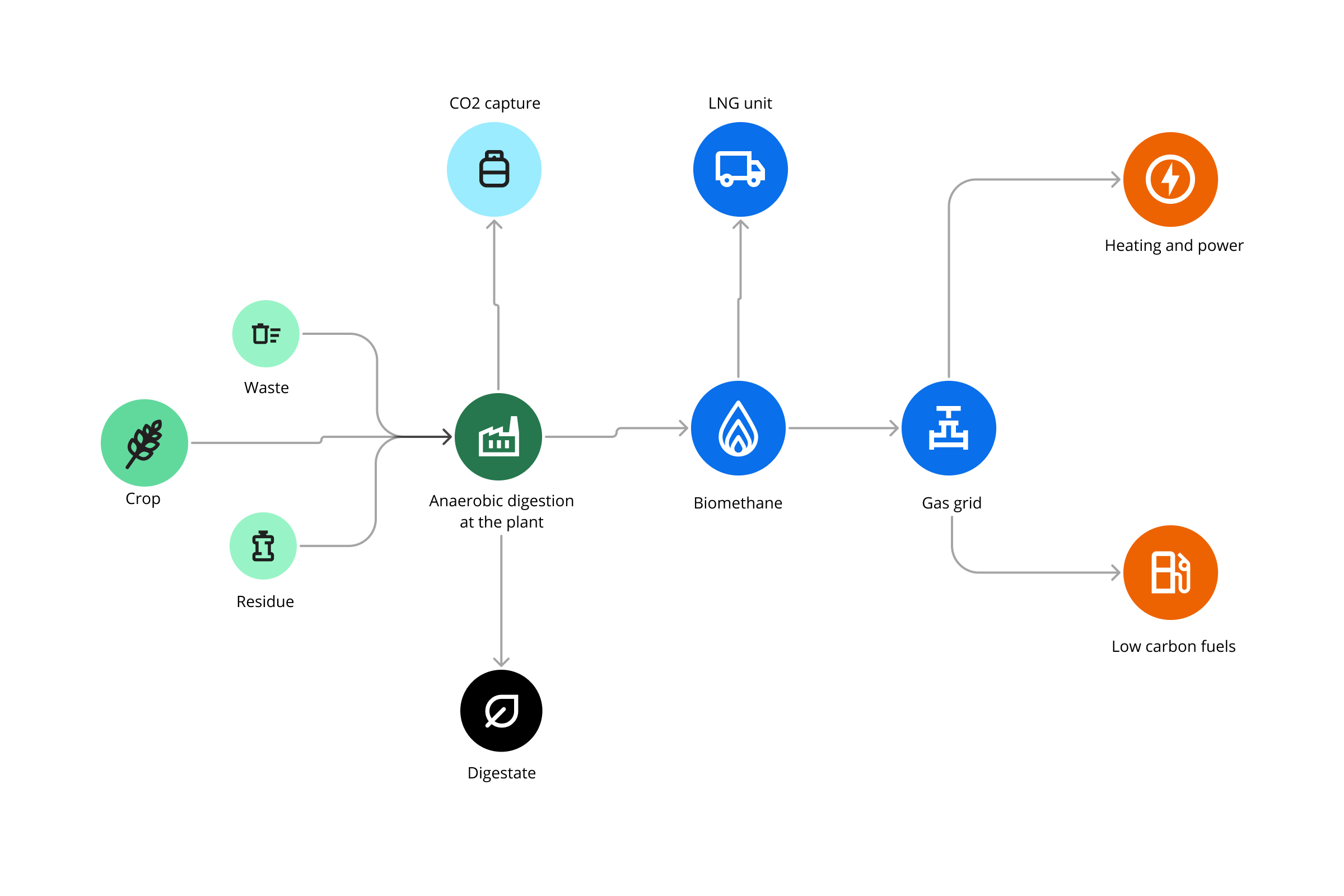
Shell Energy Europe value chain.
Due to the NDA agreement, I am not able to present detailed mockups,
prototypes, user journeys and user flows. Some of the presented examples are not rendered in high resolution on purpose, not by accident.
Created product doesn't have any existing alternatives in the market.
Business goals
To build the workflow application for operators to manage certificates of renewable gas and renewable power from scratch.
At the point of time when I joined the project, certificate management was purely manual process, the workload on the responsible team was immense,
and there was anxiety about making a mistake that would cost a company a fortune. From the business perspective,
the key goal was to automate the process to give the team time and space to focus on high-value tasks and lower the risk of monetary loss.
This project involved considering 40+ data points (attributes of the renewable gas and power) and accurate calculations which were presented on the screens in the prototypes.
User needs
Being able to understand how much renewable energy is available for deliveries
Being able to easily spot mistakes in the certificate data and flag it to the corresponding team or a customer
Being able to track upcoming and overdue deliveries
January 2022
Biomethane part of the project was kicked off. Olga joined the project.
February 2022
Olga interviwed users and created user personas with painpoints and needs. Engineers joined the team.
July 2022
3 key views were implemented. The project has changed the status from "High risk" to "Moderate risk".
November-December 2022
Discovery for a new unique feature has begun.
March 2023
The "buy" part of the feature has been delivered.
July 2023
The "sell" part of the feature has been delivered.
September-October 2023
Olga has been asked to step in to the Renewable Power pod to address inefficiency from the design side.
The pod was launched in April-May 2022, and hasn't delivered a functioning MVP since.
November-December 2023
Olga established the contact with operators of renewable power, and ran a series of workshops to understand
their painpoints, and inefficiences with the application which needed to be addressed. Users gave rating of 2 out of 10 for Renewable Power functionality (compared to 7 out of 10 of Biomethane users).
July 2024
Through series of small, medium and large design and copy enhancements as well as complete change of the data point structure
the MVP has been launched. Users were extremely satisfied.
May – September 2024
Discovery for a new feature for Biomethane has commenced. It's a new flow which automates mass balance for a renewable gas from scratch. Olga runs the discovery from the
business requirement perspective and is filling in responsibilities for 2 business analysts.
February 2025
Mass balance of the MVP is launched.
My role
I joined the project in January 2022 as a Senior Product Designer to lead the design and research on one of the pods which was responsible for biomethane part of the business.
By this time stakeholders were extremely frustrated, as the previous product team didn't deliver anything in 12 months, the risk for the business was really high, and the staff churn rate on the project was high.
There were only a dedicated BA and a PM on the team, engineers were meant to join in a few weeks time after me which gave me enough time to set up initial user interviews and establish user needs and painpoints.
In the first 6 months my pod delivered 3 critical views, and our project changed the status from "high risk" to "medium risk".
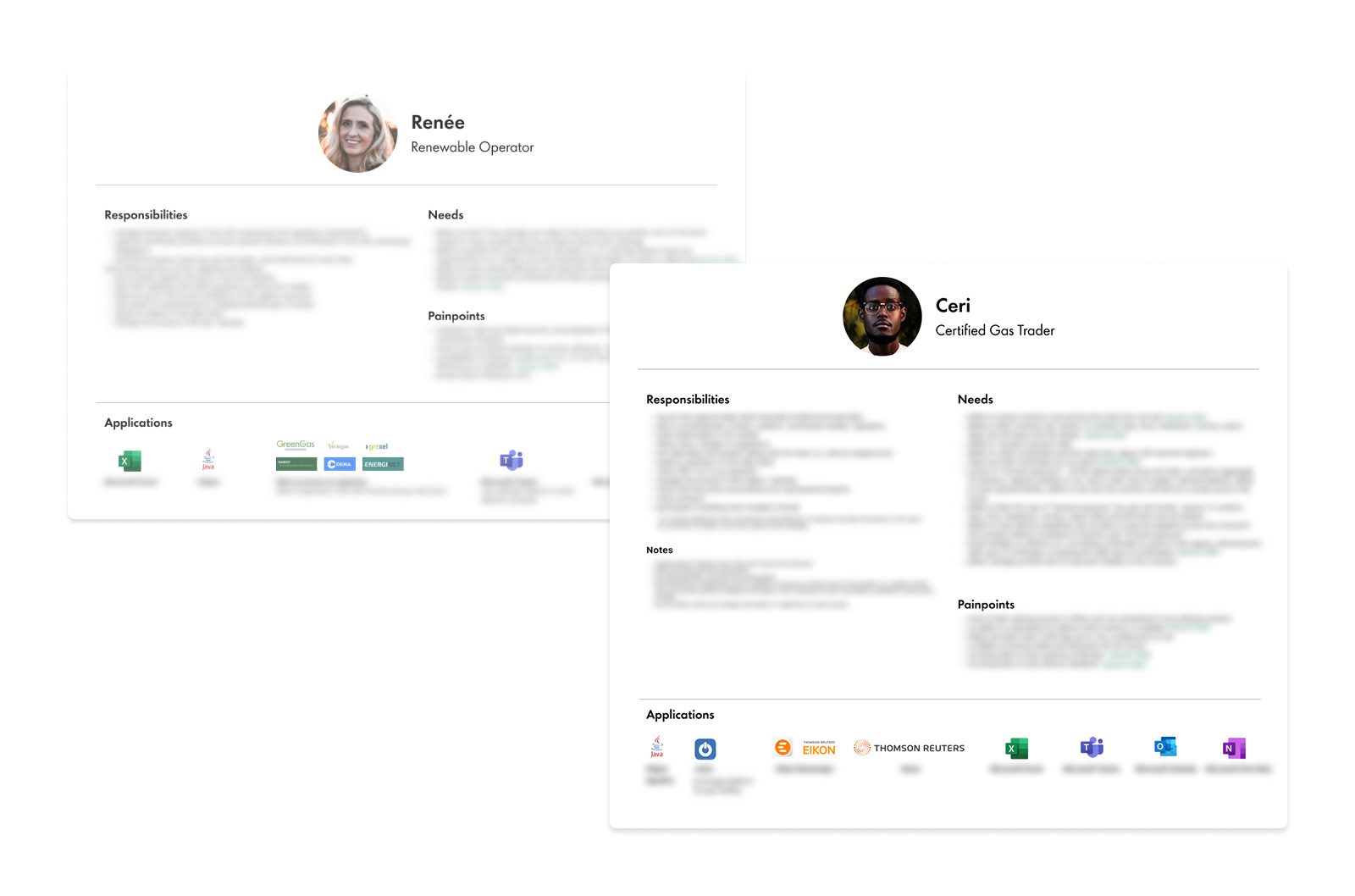
Initial user personas created in 2022.
I've influenced the Agile product delivery process to be more efficient and inclusive of user needs and feedback.
Research and strategy
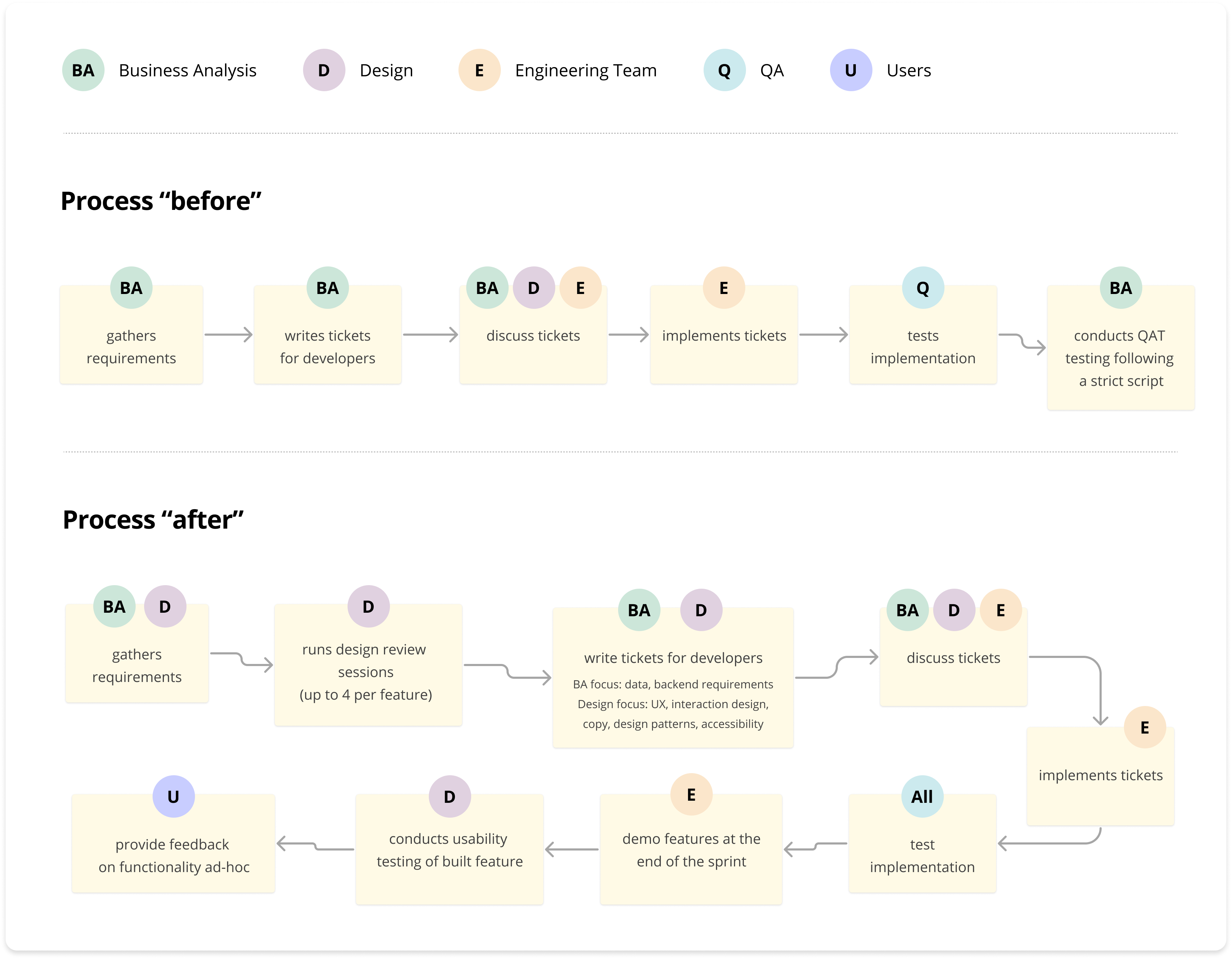
Business requirements were missed due to 2 factors:
users not being familiar with the product development process and therefore not requesting the functionality they need
rigid, scenario-based structure of the QAT testing which tells users to follow the scenario rather than allowing them to explain their expectations from the tool
I consider one of my achievements that I've managed to influence the requirement gathering process in the collaboration with the business analyst:
Closer feedback loop with users and PO
Business requirements were discussed at length and are not missed
All necessary functionality (and beyond) is delivered
Design leadership
By the end of Q1 2023 product pod I worked at was doing really well, and Shell was offering contract conversions. I wanted to improve the state of design across all pods on the project (there were 2 more), and
a role of a lead designer was available. I've applied for this role to bring consistency in design patterns, champion accessibility standards and improve collaboration in the design team and between designers and engineers.
I was involved in hiring designers, in accessing designers' skillsets and making decisions on extending and terminating contracts with designers. In my lead role I had between 2 and 3 designers of different levels (from junior to senior)
that worked with me whom I supported in their day-to-day work and from overall development perspective.
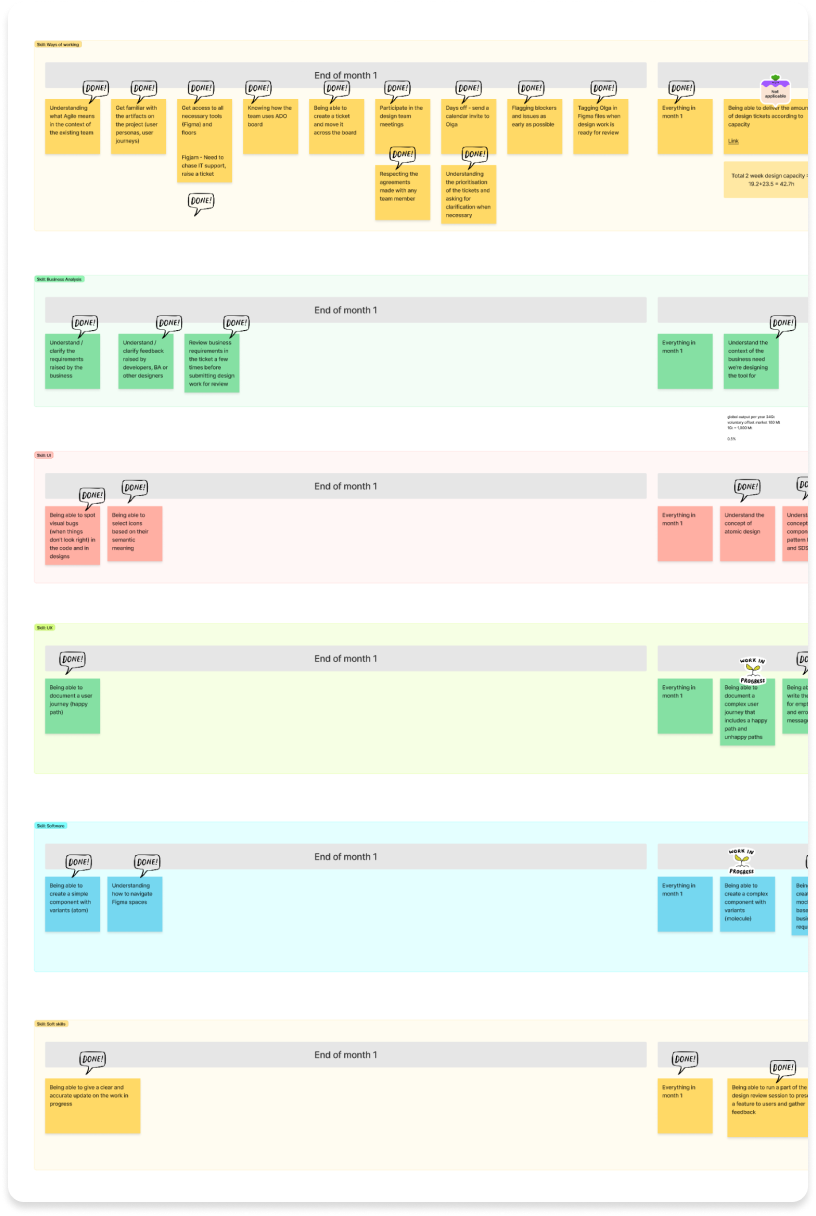
Framework for a junior designer.
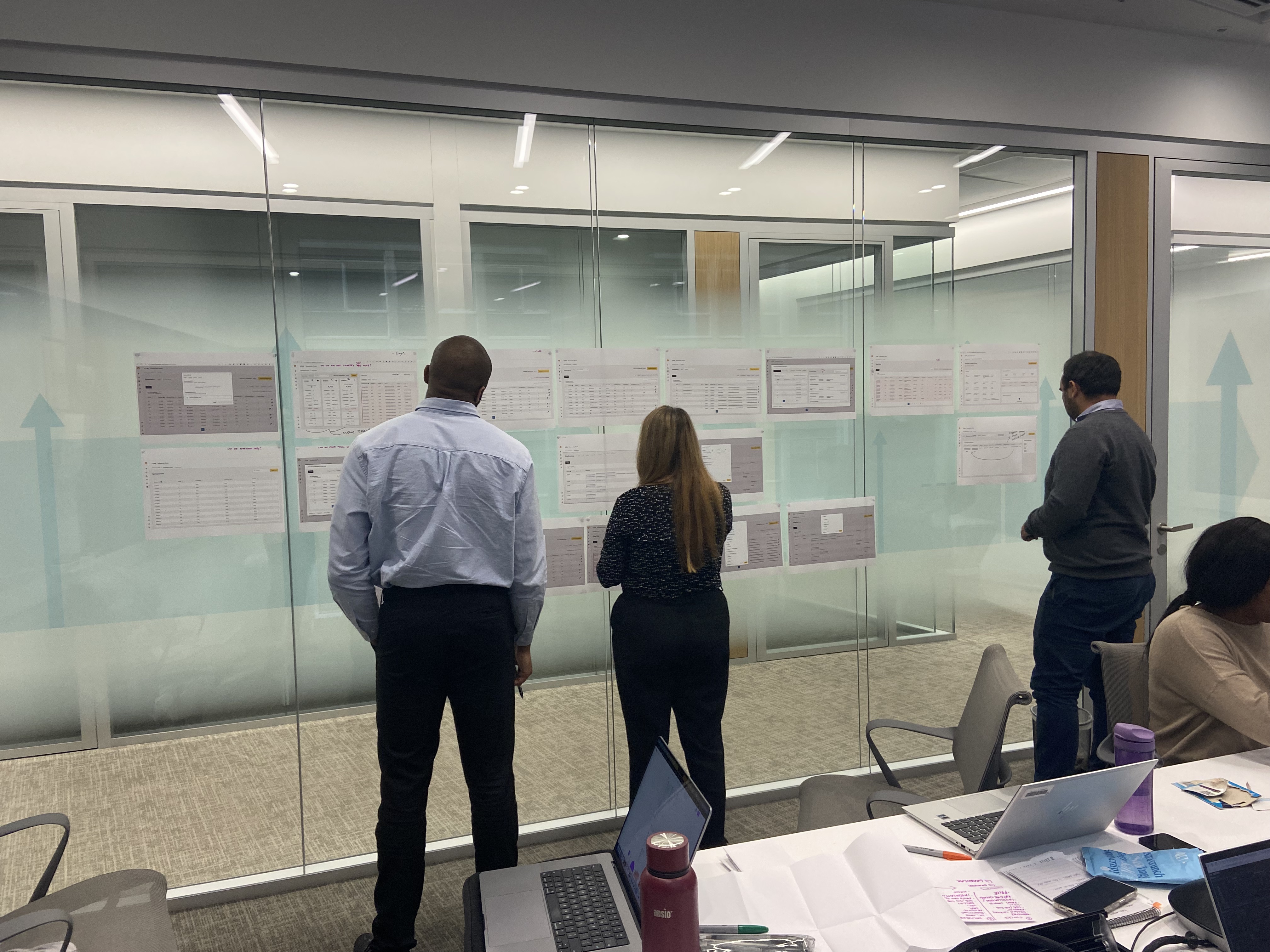
Workshop with operators reviewing already built screens.
Efficiency
By the end of Q4 2023 business and senior IT stakeholders made a decision to disassemble another pod which was responsible to deliver the MVP for
renewable power as it's been more than 12 months, and that pod was unable to deliver functioning MVP. Myself, a BA, a PM and engineers were put in charge to deliver MVP on this other pod.
Within 10 months from taking over, we've shipped an MVP for renewable power, and a user satisfaction rating went from 2 till 6.5.
Deliverables
Workshop facilitation (sketching sessions with users and stakeholders, educating business stakeholdres on the design processes, feature breakdowns with engineers)
Service level diagrams
Low fidelity user flows and high fidelity user flows
High fidelity mock ups and prototypes
User research reports
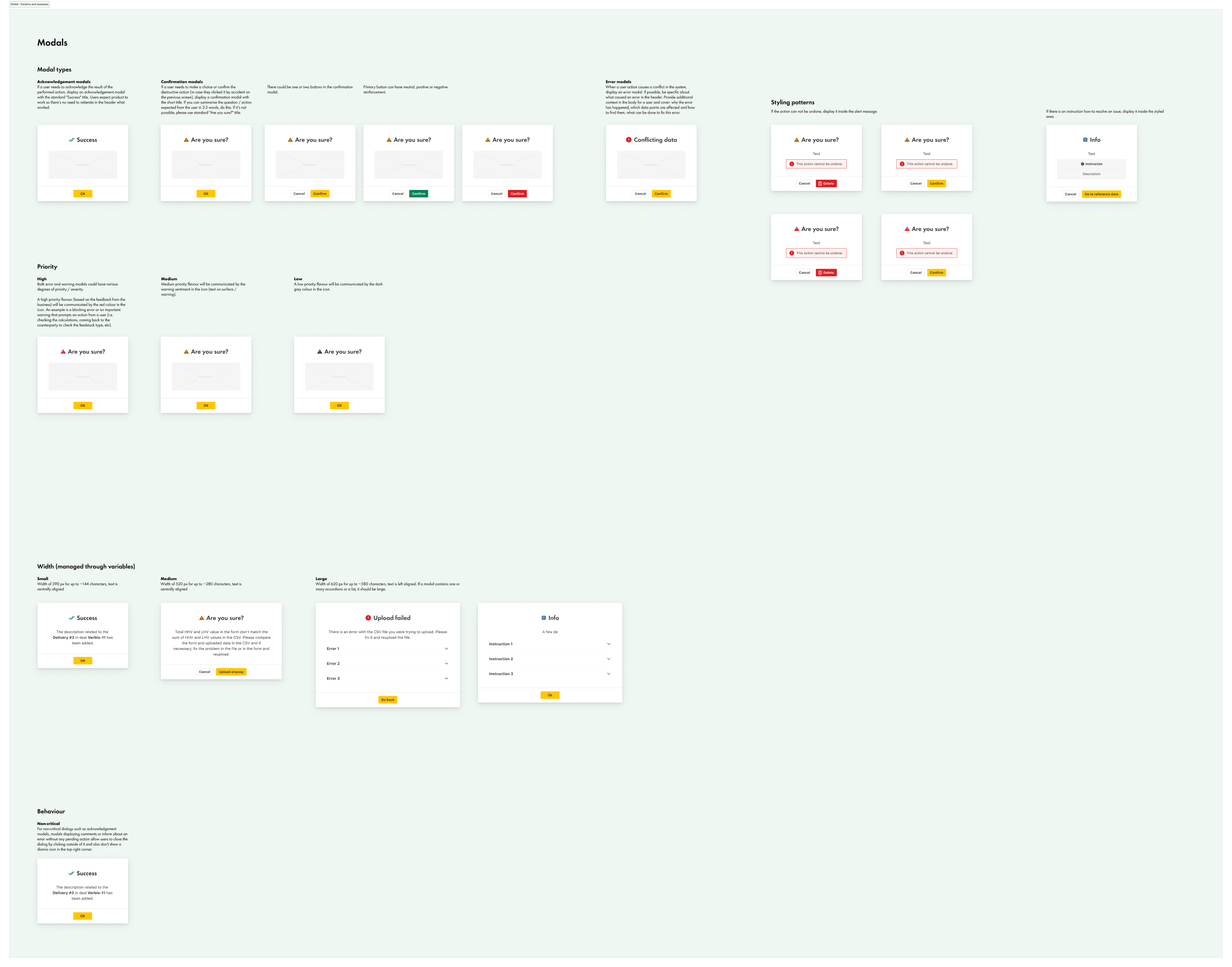
Bespoke components and patterns for the application, including filter panels, complex tables with nested rows and columns and modal dialogs
Form design with data validation
Unhappy paths and notifications on the data ingestion
Content design (considering US vs UK English differences; data formatting across various regions; reviewing new terms whether they are grammatically correct)
Tools: Figma Design and FigJam, Dovetail, Microsoft Copilot, MS teams
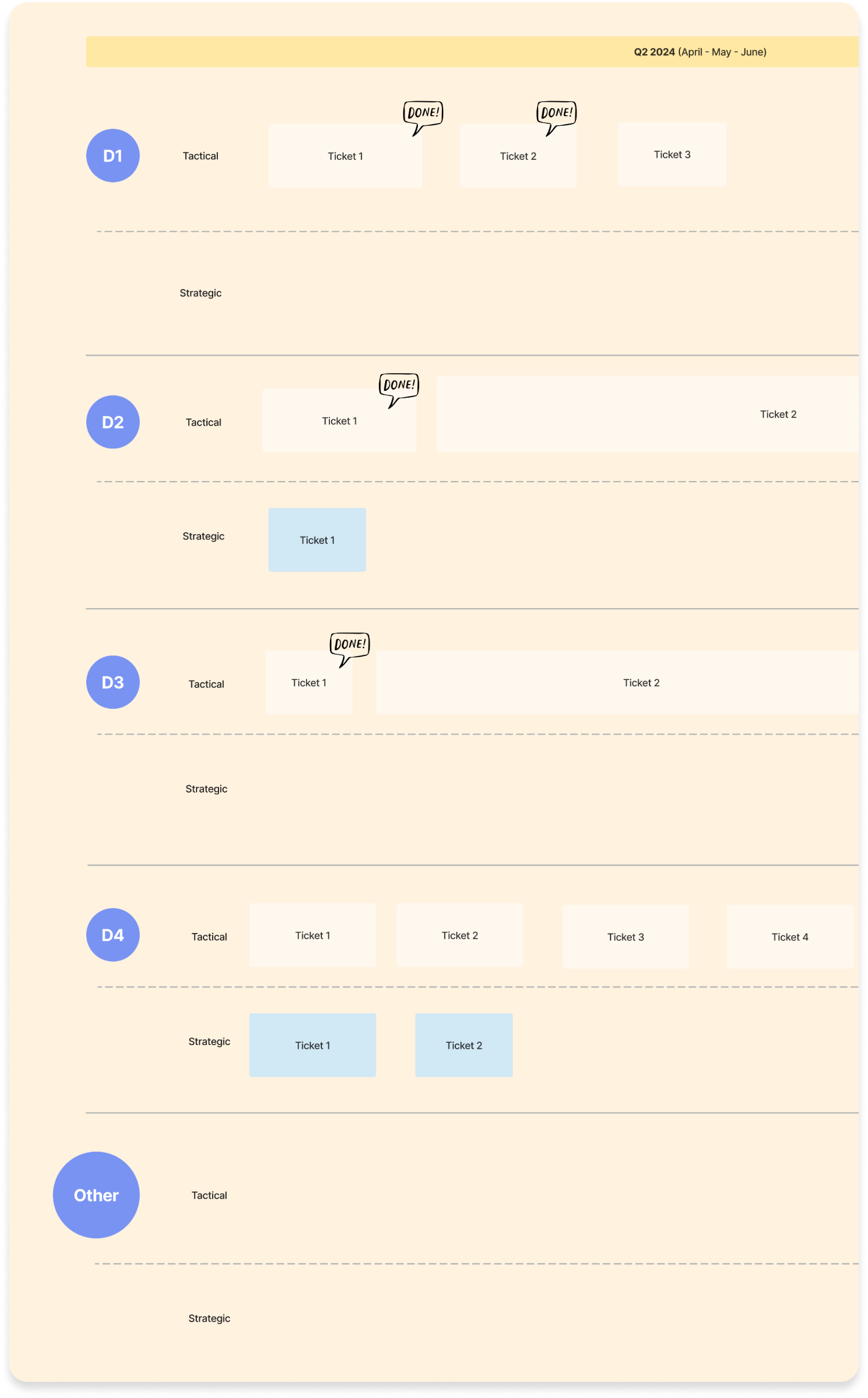
This is a template of a design roadmap that I used to monitor the initiatives in my team. On a weekly basis we would go over tactical (delivery) initiatives, and discuss which strategic initiatives we'd need to tackle on the top of that.
Service design
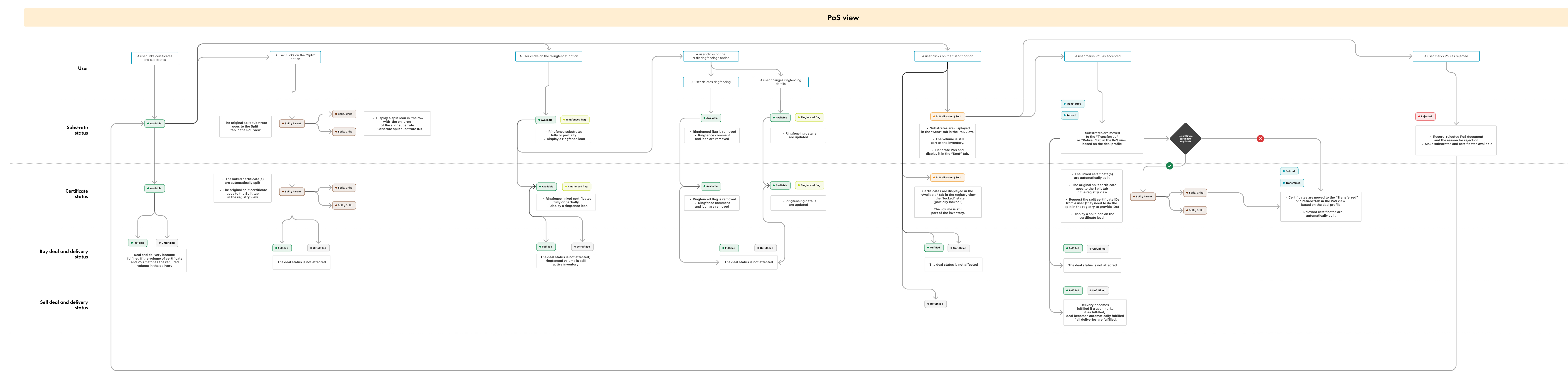
An example of a service level diagram with statuses.
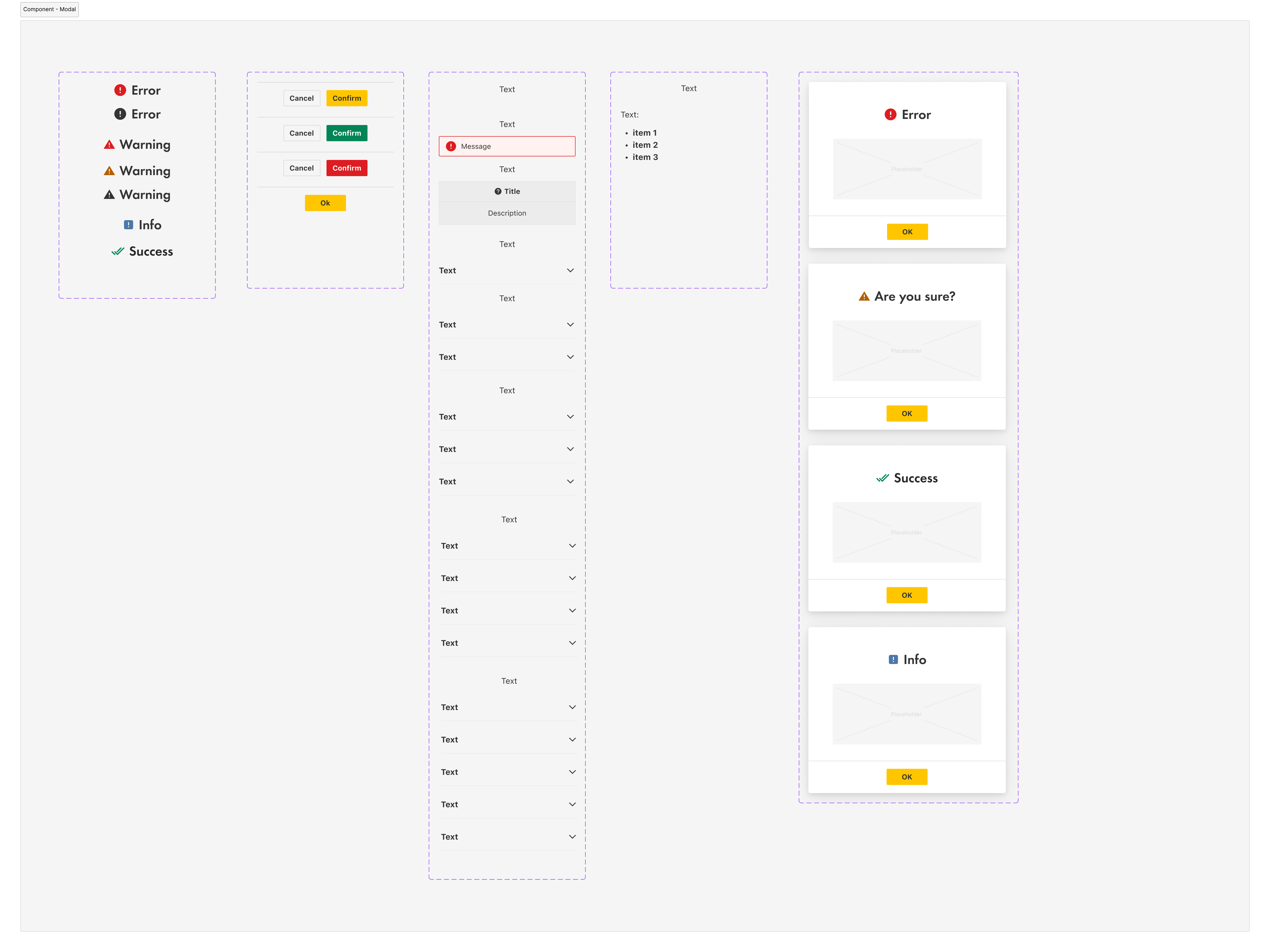
Bespoke per project Figma components
Example of the complex bespoke Figma component outside of the design system.
Documented design patterns
Example of the documented design pattern on the platform. It contains atoms and molecules from the design system but the way how they are assembled into organisms is driven by business and user needs.
 LinkedIn
 Medium